How to Prepare for Your Dog Photography Session (Without Stressing Yourself or Your Dog)
Almost every client tells me some version of the same worry. They’re concerned their dog won’t behave, won’t sit still, or won’t do what’s expected. Some laugh it off. Others apologise before we’ve even met. So I want to say this clearly, before anything else:
“ Your dog does not need to be perfect to be beautifully photographed.”
What Actually Matters (And What Doesn’t)
Let’s clear something up straight away.
Your dog does not need to perform for this session to work. They don’t need obedience cues on command, eye contact on demand, or flawless lead manners. Those things can be useful in some contexts, but they are not what creates meaningful photographs.
What matters is something much quieter.
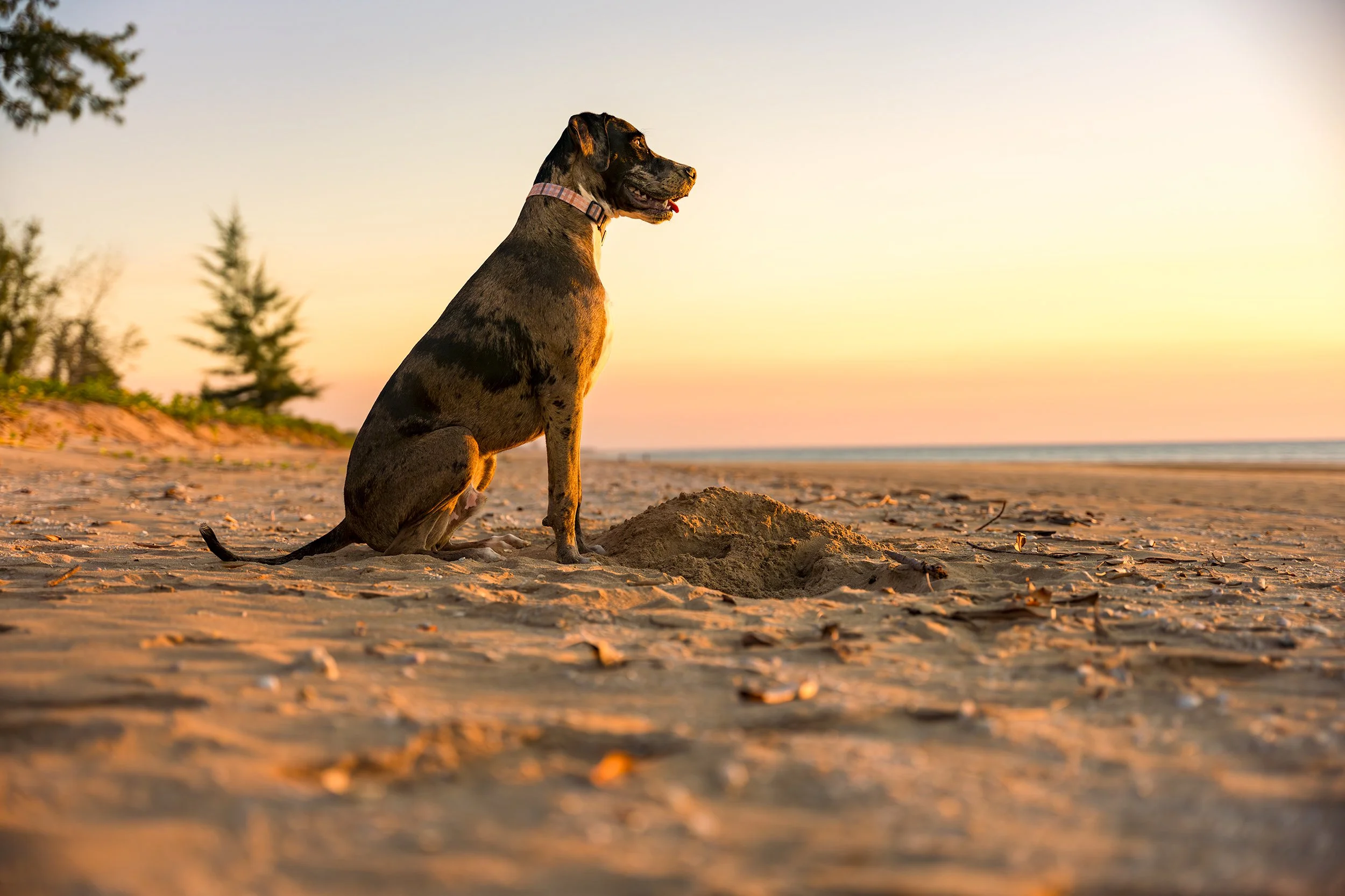
When a dog feels safe, unpressured, and allowed to move at their own pace, their true personality starts to show. Their body language softens. Their expressions become genuine. That’s when images stop looking posed and start feeling like them.
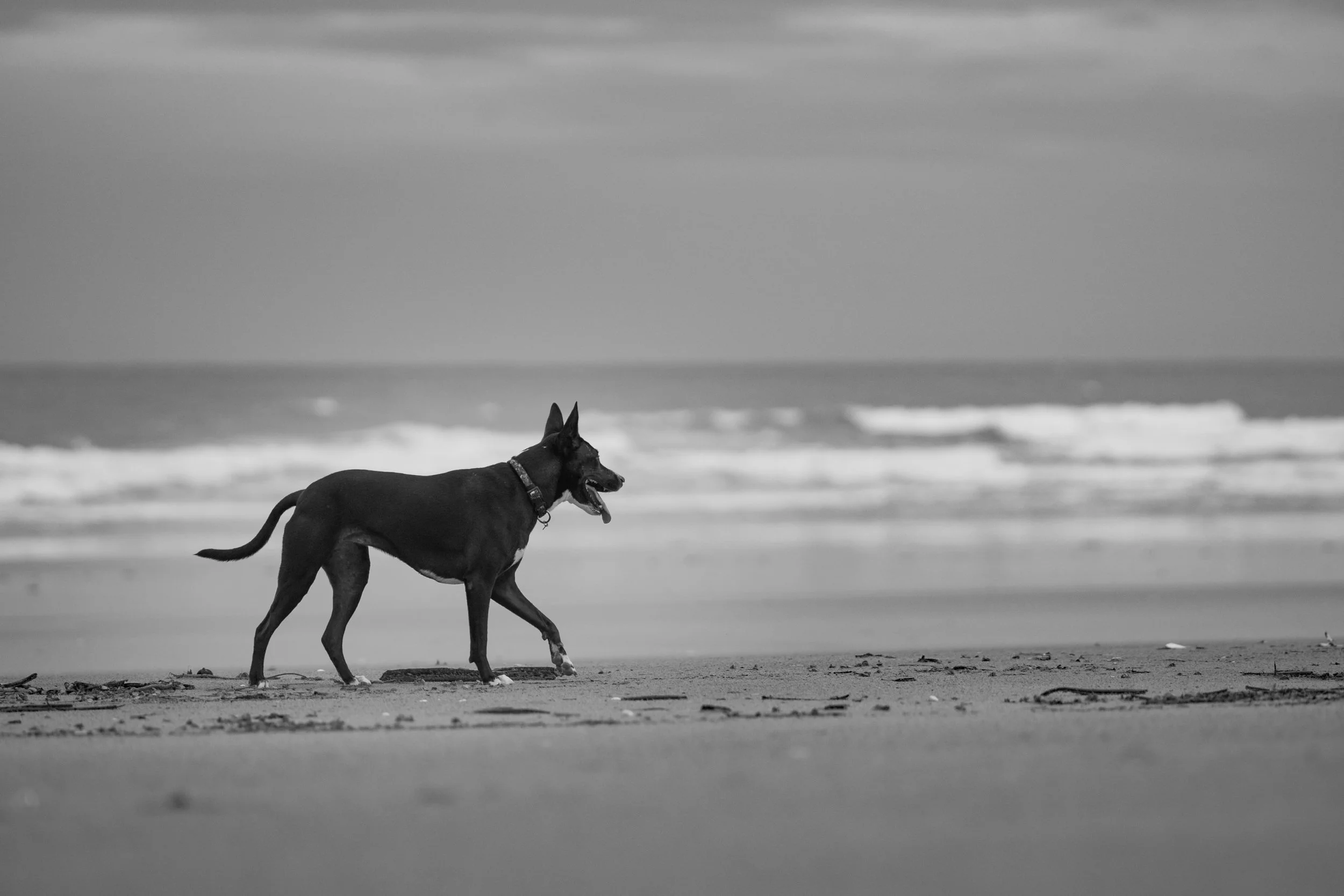
My job is to work with the dog you bring, not the dog you wish they were for an hour.
How to Prepare Your Dog (Gently, Not Intensely)
Preparation isn’t about control. It’s about regulation.
In the hours leading up to your session, it helps to keep things familiar and calm. Avoid busy outings, new environments, or anything that might leave your dog overstimulated or exhausted. A dog who feels settled will naturally offer more relaxed, connected moments.
Bring items your dog already knows. Their usual lead or harness, treats they genuinely love, and even a favourite toy or comfort item can make a noticeable difference. Familiar smells and routines help dogs feel grounded far more effectively than anything new.
One thing I actively recommend against is intensive training right before a session. While it’s well-intentioned, last-minute obedience work often adds pressure and expectation. Dogs feel that tension, and it can show up as frustration or shutdown.
I photograph dogs as they are on the day, not at their most controlled.
How to Prepare Yourself (This Matters More Than You Think)
Dogs are exceptionally good at reading us.
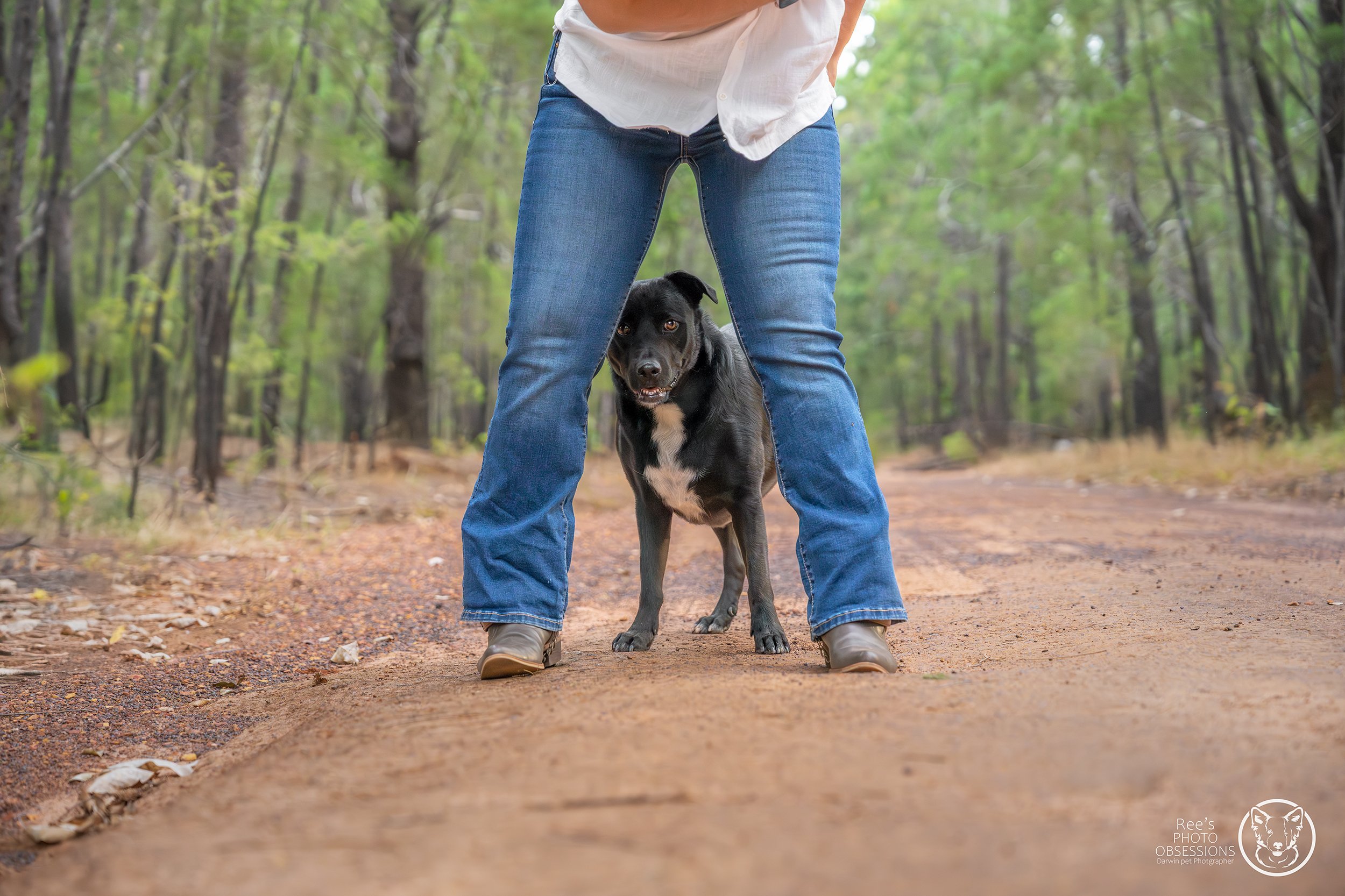
If you arrive apologising for your dog, bracing for things to go wrong, or feeling responsible for how the session unfolds, your dog will sense that immediately. That energy travels straight down the lead.
Instead, I encourage you to come with openness rather than expectation. You don’t need to manage your dog, direct the session, or worry about outcomes. You’re allowed to simply be present with them.
That’s the role you’re trusting me with.
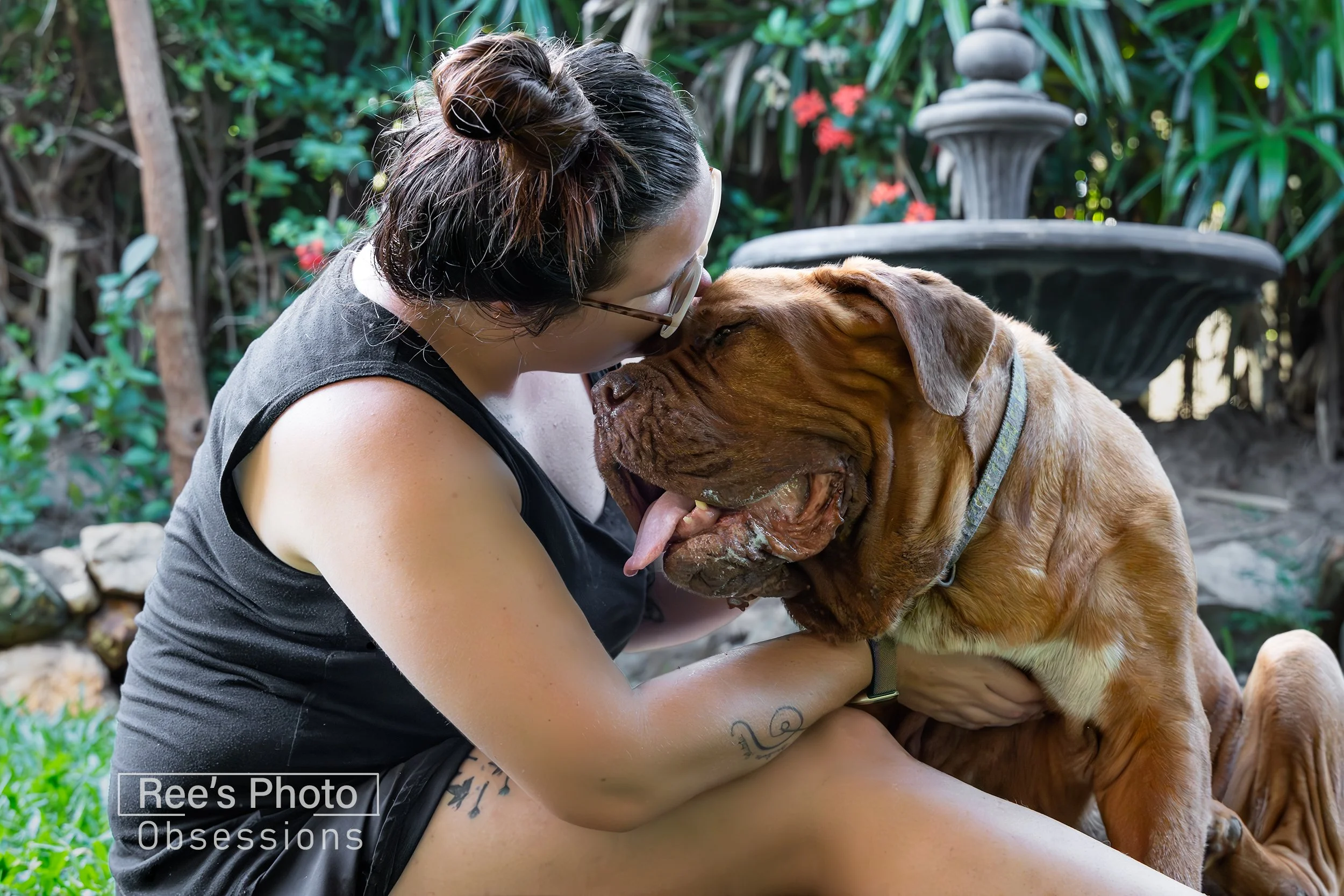
What to Wear (And Why It Makes a Real Difference)
What you wear affects far more than how the photos look. It influences how you move, how comfortable you feel, and how naturally you interact with your dog.
The aim isn’t to look styled or “photo-ready”. The aim is to look like yourself on a good day.
Choose clothing that allows you to move freely. You may be walking, crouching, sitting on the ground, or interacting closely with your dog. If something needs constant adjusting or feels restrictive, it will show in your body language long before it shows in the final images.
Outdoor sessions photograph beautifully with calm, neutral tones. Soft earth colours, muted blues, and gentle neutrals work well because they don’t compete with the environment or your dog. Loud colours, heavy logos, and very high contrast outfits tend to draw attention away from what matters most.
Texture is more important than trends. Natural fabrics like linen, cotton, knits, and denim add visual depth without distraction. Shiny or stiff fabrics often photograph awkwardly and feel uncomfortable over time.
Shoes matter too. This is an outdoor experience, not a fashion shoot. Wear footwear you can walk and stand in comfortably, especially on uneven ground. When people feel physically at ease, they move differently, and that softness comes through in the images.
If you’re unsure how your clothing might interact with your dog’s coat colour or the chosen location, I’m always happy to guide you. These small details add up to a calmer, more cohesive experience.
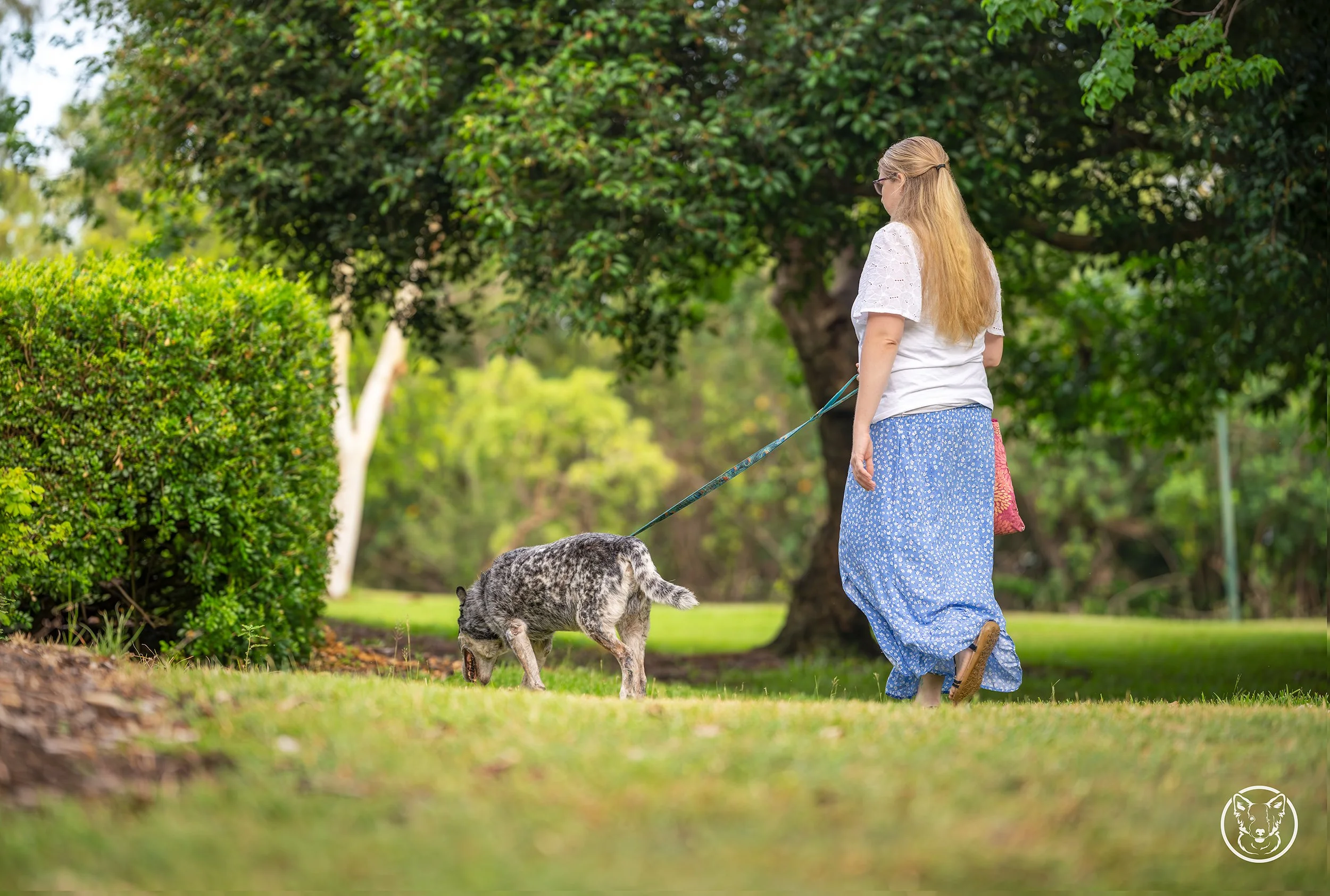
What If My Dog Is Nervous, Reactive, or High Energy?
Many of the dogs I photograph fall into one or more of these categories.
That’s why my sessions are designed to be calm, flexible, and behaviour-led. We choose locations thoughtfully, manage space carefully, and adjust the pace based on what your dog is showing us in the moment.
There is no forcing and no pushing through discomfort. Ever.
Some dogs need time to observe before they engage. Others need movement before they can settle. All of that is normal, and all of it is workable.
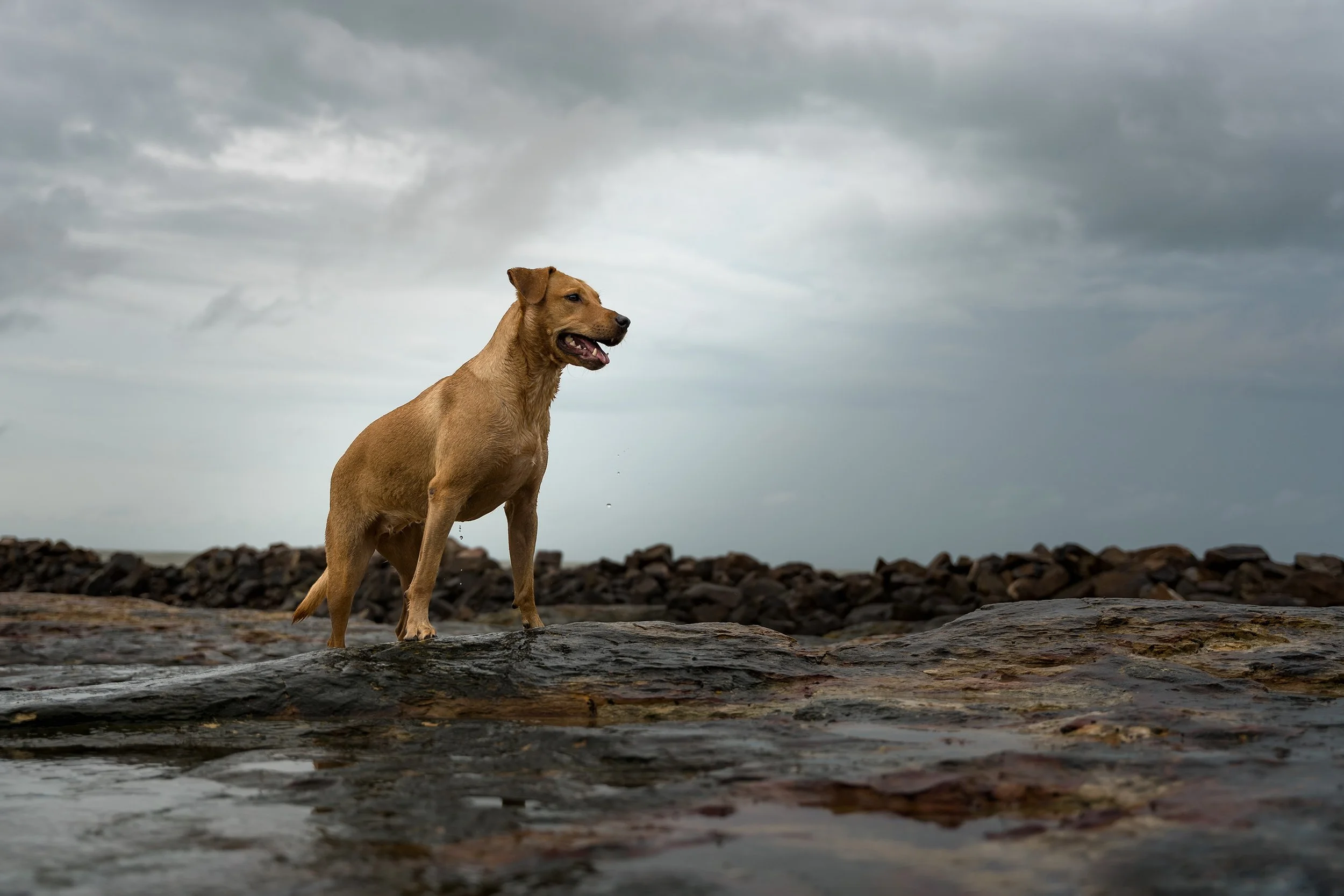
A Real Example From a Session
One client told me before her session that she didn’t expect much. Her dog was distracted, highly scent-focused, and uninterested in anything we were doing at first.
We slowed right down. We followed her dog’s lead. We let the session unfold instead of trying to control it.
Those early moments, when her dog was simply existing in the space, became some of the most meaningful images from the session. Quiet, grounded, honest moments she hadn’t realised she would treasure.
By the end, her dog chose to engage on her own terms.
That’s how trust works.
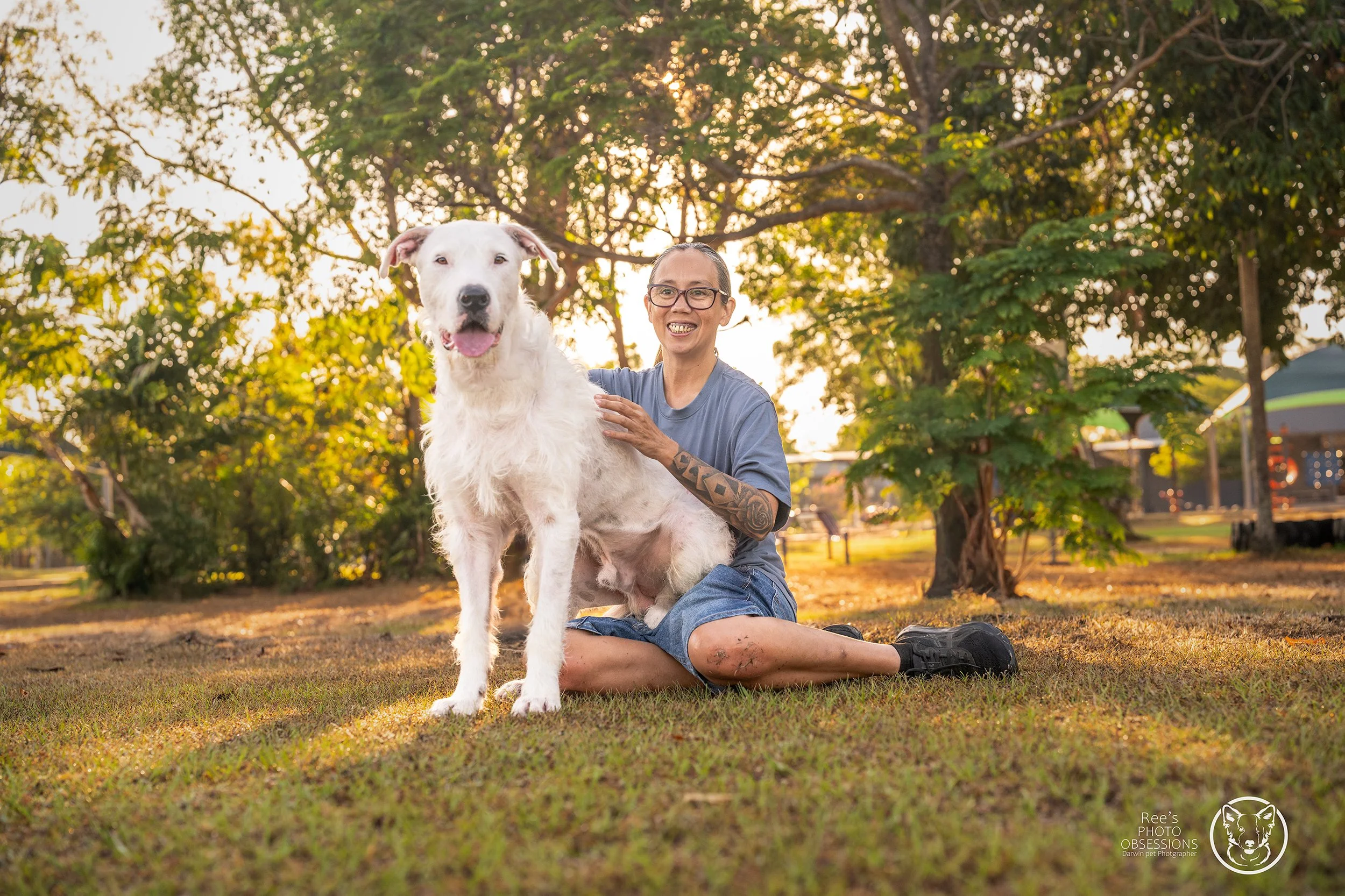
Frequently Asked Questions
What if my dog doesn’t listen at all?
Listening isn’t a requirement for connection. I work with body language and behaviour, not obedience cues.
Should I groom my dog beforehand?
Only if it’s part of their normal routine. Big changes can make some dogs feel unsettled.
What if I feel awkward being photographed?
You won’t be asked to pose or perform. Most people forget the camera is there once they focus on their dog.